Understanding Leather Types and Their Cleaning Needs
Full Grain, Suede, Nubuck, Patent, and Bonded Leather: Structural Differences That Dictate How to Clean Leather
Knowing how to clean leather starts with identifying its specific type—each has distinct structural properties that determine safe cleaning methods. Full-grain leather retains the entire natural grain, making it durable but porous and prone to staining; it responds well to mild soap-and-water cleaning followed by conditioning to replenish lost oils. Suede and nubuck are buffed to create a soft, velvety nap—highly absorbent and extremely sensitive to liquids. They require dry cleaning only: gentle brushing with a suede brush and targeted use of a specialized eraser block. Never apply water or liquid cleaners. Patent leather features a glossy, polymer-based coating that repels moisture; wipe gently with a barely damp microfiber cloth, avoiding alcohol or solvents that risk cracking the finish. Bonded leather—composed of leather fibers bonded with polyurethane—is the least durable and cannot be conditioned; limit cleaning to light dusting or very gentle wiping with a dry or slightly damp cloth.
Using the wrong method on any type risks irreversible damage, from discoloration and stiffening to delamination or nap loss. Matching technique to structure isn’t optional—it’s foundational to preservation.
Why pH Sensitivity and Pore Architecture Make Universal Cleaners Risky
Leather’s reaction to cleaners depends heavily on both tanning chemistry and physical structure. Vegetable-tanned leather is naturally alkaline, while chrome-tanned leather leans acidic—so a universal cleaner with an unbalanced pH can disrupt this delicate equilibrium, stripping protective oils and accelerating cracking or stiffness. Equally important is pore architecture: full-grain leather’s open pores readily absorb liquids, whereas patent leather’s sealed surface actively repels them. Suede and nubuck possess a raised nap with microscopic capillaries that wick moisture rapidly inward—making water-based solutions especially hazardous. Without accounting for these variables, even well-intentioned cleaning can cause over-drying, dye migration, or surface etching. Always perform a spot test on a hidden area before proceeding.
How to Clean Leather: The Safe, Effective 4-Step Process
Step 1: Pre-Cleaning Assessment — Spot Testing, Soiling Level, and Surface Integrity Check
Begin every cleaning session with assessment—not action. Dust the surface using a dry microfiber cloth or soft-bristled brush to remove loose debris. Examine for stains, scratches, fading, or existing cracks. Then conduct a spot test: apply your chosen cleaner to an inconspicuous area (e.g., inside seam or underside), wait 5–10 minutes, and check for discoloration, swelling, or texture change. This step confirms compatibility and prevents avoidable damage. Also gauge soiling level: light dust and body oils need minimal intervention, while embedded grime or oily residues may require more deliberate treatment. A thorough pre-check ensures the rest of the process remains safe, efficient, and tailored.
Step 2: Gentle Soil Removal — Blotting Over Rubbing, pH-Balanced Solutions, and Immediate Stain Response
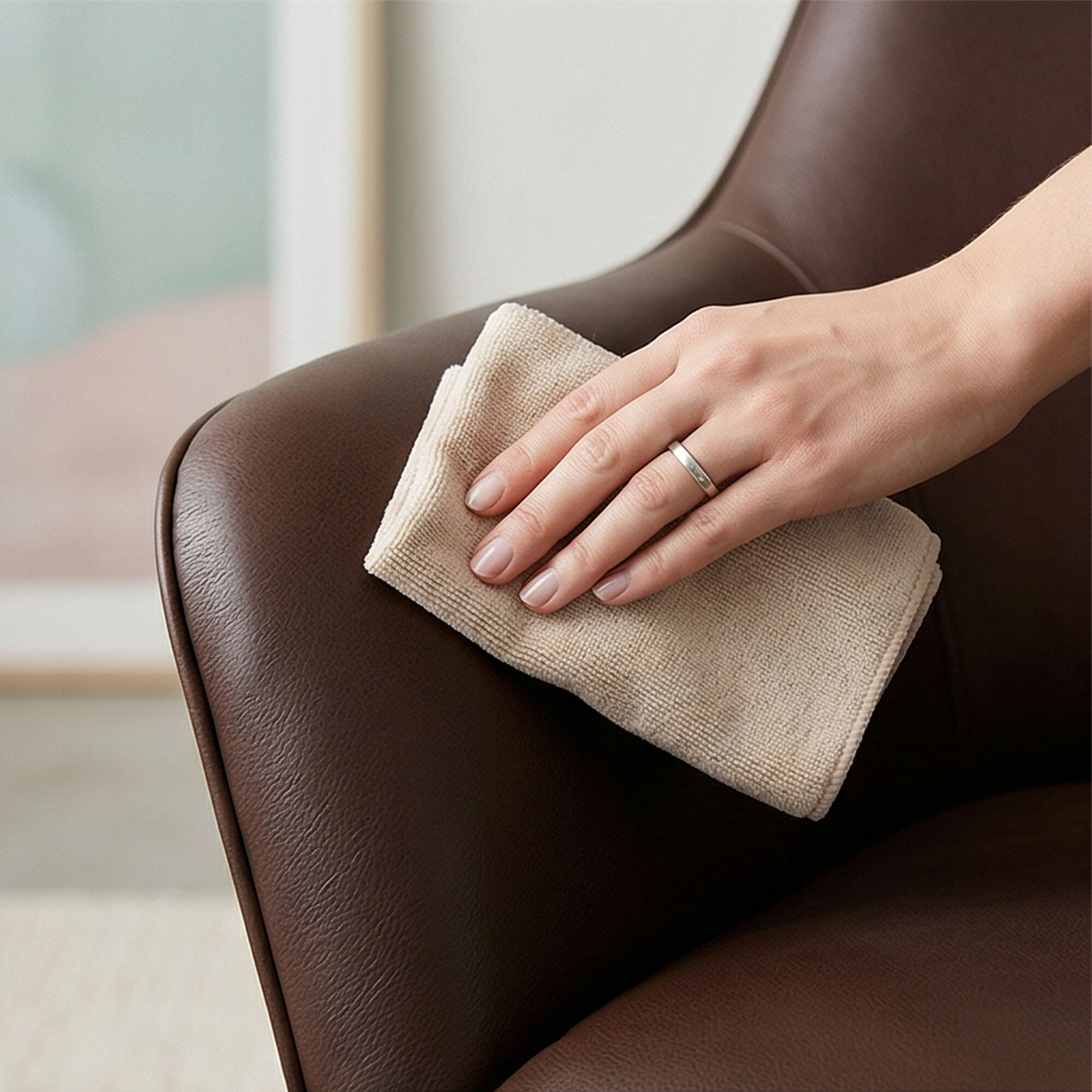
For routine maintenance, use a dedicated, pH-balanced leather cleaner formulated for your leather type. Dampen a microfiber cloth—never soak it—and wring thoroughly. Wipe in light, circular motions, then follow with a second clean, damp cloth to lift residue. For fresh spills or stains, blot immediately with a dry, absorbent cloth; rubbing forces contaminants deeper into pores or nap. Stubborn marks may respond to a soft-bristled brush used lightly on full-grain or nubuck—but always start conservatively. Avoid household substitutes like baby wipes, vinegar, or dish soap: their unregulated pH and surfactants degrade leather proteins and strip tanning agents over time. Timely, measured response simplifies cleaning and protects integrity.
Step 3–4: Air-Drying Best Practices and Conditioning Timing (The 72-Hour Rule)
After cleaning, air-dry leather naturally—away from direct sunlight, radiators, HVAC vents, or hair dryers. Heat dehydrates collagen fibers, causing brittleness and micro-cracking. Allow full evaporation, which typically takes 12–24 hours depending on thickness and humidity. Then observe the 72-hour rule: wait at least three days before applying conditioner. This ensures all residual moisture has fully dissipated and pores are open for optimal absorption. Applying conditioner too soon traps moisture beneath the surface, inviting mildew, spotting, or uneven absorption. Once ready, apply a thin, even layer of high-quality conditioner—preferably one matched to your leather type—and let it absorb for 30–60 minutes before buffing gently with a clean cloth to restore natural luster and suppleness.
Leather Conditioning and Protection Essentials
Cleaning is only the first phase—conditioning and protection sustain leather’s resilience and appearance over time. Not all conditioners are interchangeable: beeswax-based formulas create a robust, water-resistant barrier ideal for high-wear items like boots and belts. Cream conditioners—blends of penetrating oils and light waxes—offer balanced hydration and subtle sheen, making them ideal for handbags, jackets, and furniture. Dubbin, a traditional wax-heavy compound, delivers intense waterproofing and flexibility for rugged footwear. Critically, choose pH-balanced products to preserve the leather’s natural acid mantle—alkaline conditioners accelerate fiber degradation, especially in chrome-tanned leathers.
Condition every six months under normal conditions—or more frequently in arid climates or with daily use. Key indicators it’s time to recondition include surface dryness, reduced pliability, visible stiffness, or fine surface cracks. Consistent conditioning restores essential lipids, slows oxidative aging, and extends functional life. As with cleaning, always patch-test first to rule out adverse reactions.
Preventing Damage: Environmental Threats and Long-Term Storage Science
UV Degradation, Heat Warping, Moisture Absorption, and Why Breathable Acid-Free Storage Matters
Even meticulous cleaning and conditioning can’t offset environmental neglect. Ultraviolet radiation breaks down collagen and fades dyes, leading to surface embrittlement and loss of tensile strength. Prolonged heat exposure permanently distorts shape and accelerates oil oxidation. Meanwhile, excess moisture invites mold, mildew, and hydrolysis—the chemical breakdown of tanning agents—especially in humid storage.
Effective prevention hinges on stable, passive protection: store leather away from windows and heat sources, maintain relative humidity between 40–60%, and use breathable, acid-free tissue paper or cotton garment bags—not plastic—to wrap or cover items. Acid-free materials prevent yellowing and fiber degradation; breathability allows air circulation without trapping condensation. This science-backed approach doesn’t just preserve aesthetics—it safeguards structural integrity for decades.
FAQs
What is the best way to clean full-grain leather?
Full-grain leather responds well to mild soap-and-water cleaning followed by conditioning. Avoid soaking the leather and steer clear of harsh chemicals.
How should suede and nubuck leather be cleaned?
These materials should only be cleaned using dry methods such as brushing with a suede brush and using a specialized eraser block. Never use water or liquid cleaners.
Can universal cleaners be used on all leather types?
Universal cleaners are risky as they may disrupt leather’s natural pH balance and pore structure. It’s always better to use cleaners specific to the leather type and perform a patch test.
How often should leather be conditioned?
Leather should be conditioned every six months or more frequently in arid climates or with daily use. Look for signs like dryness or stiffness as indicators for reconditioning.
Why is storing leather in acid-free and breathable materials essential?
Acid-free and breathable materials prevent yellowing and fiber degradation. Breathable storage also ensures air circulation, preventing trapped condensation and mold growth.