Vegan leather: A New Choice For Sustainable Fashion
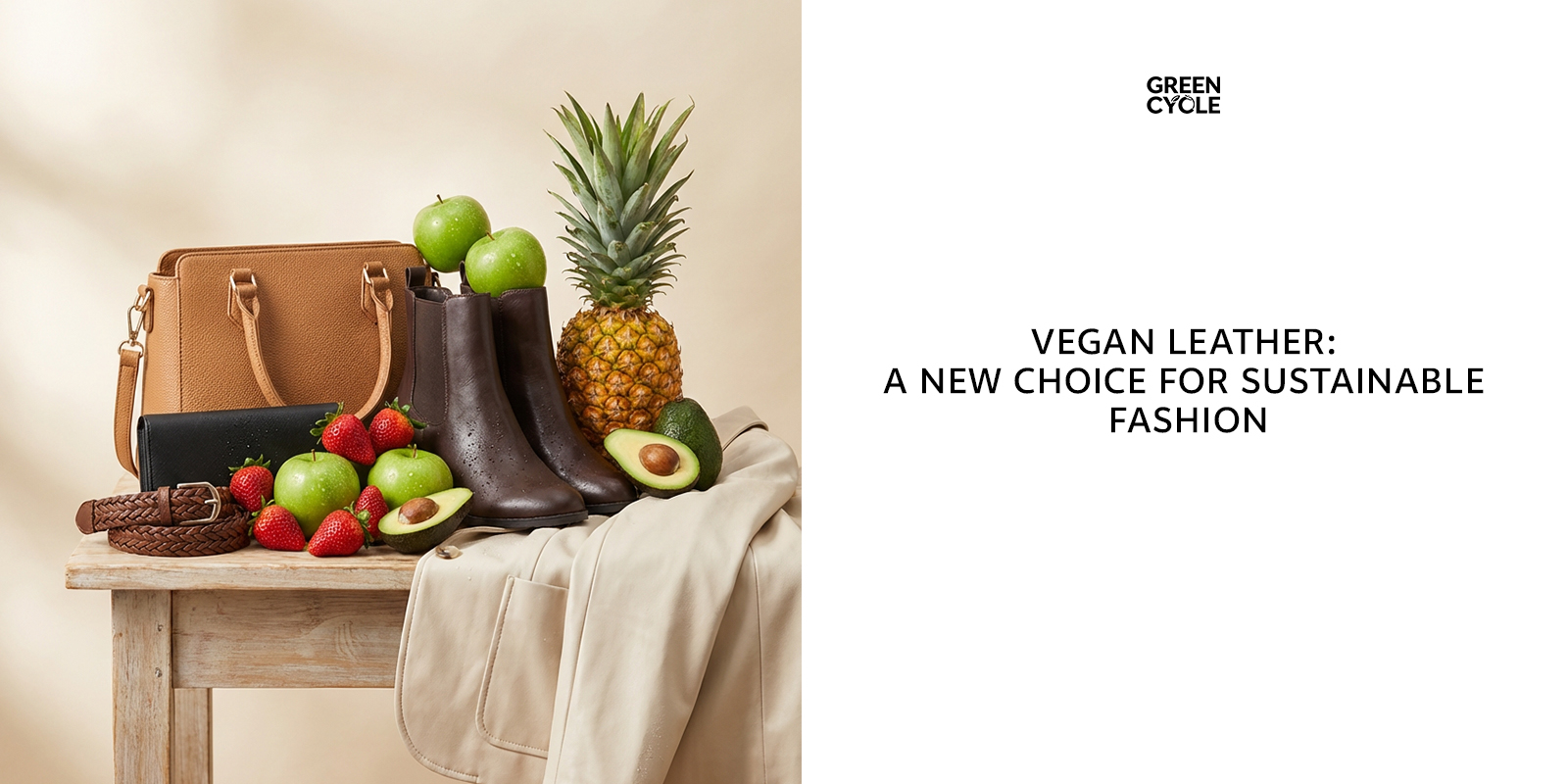 As "environmental protection" and "sustainability" become core keywords in the globalconsumer market, a new material-vegan leather-is rapidly entering the public eye as analternative to traditional animal leather. lt eliminates dependence on animals while respondingto modern society's pursuit of green living, becoming the "new darling" across multiple sectorsincluding fashion, home furnishings, and automotive.So, what exactly is vegan leather? Howdoes it differ from the traditional leather we know? And why is it sparking a material revolution?
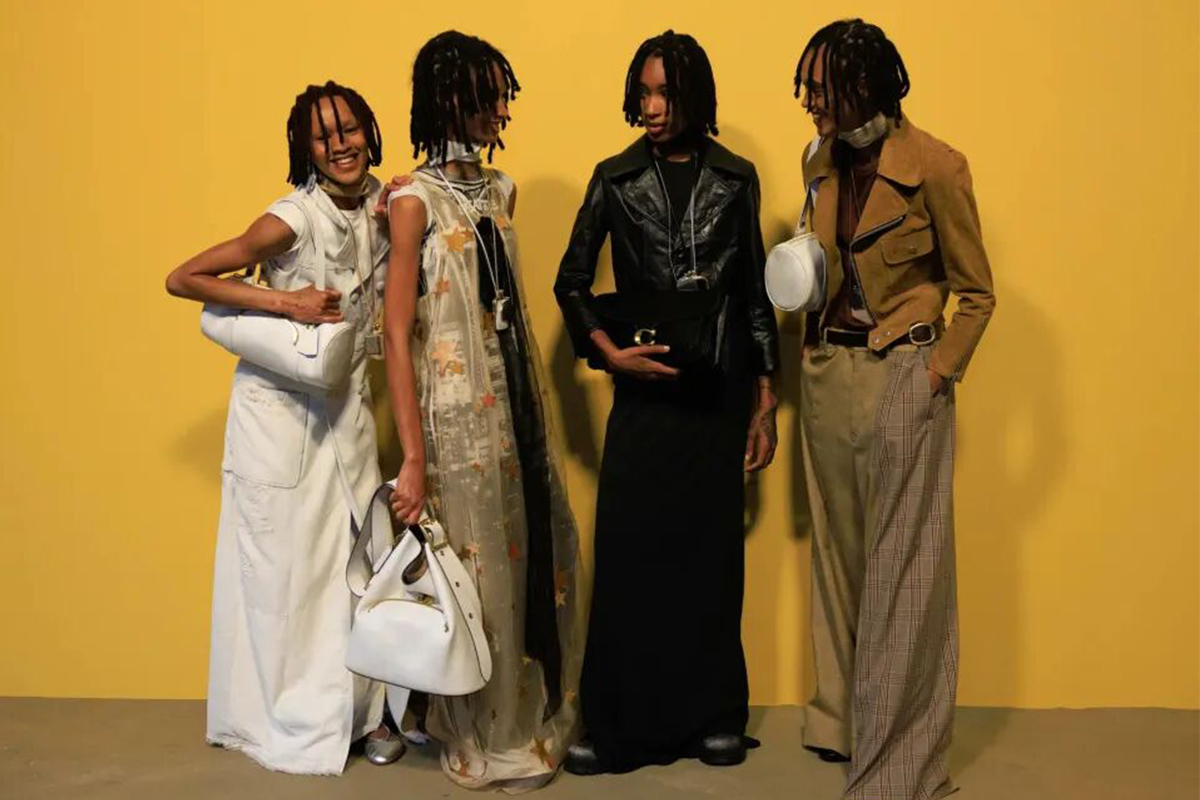
At its core, "'vegan leather" means "free from animal-derived materials." Instead of obtaininghides through animal slaughter, it uses plant fibers, microorganisms, and recycled materials asraw ingredients. Through modern processing techniques, it creates a material with the textureand performance of leather. But this definition is just the foundation-true vegan leather is acomprehensive solution that balances "environmental sustainability," "user experience," and"industrial viability."
Compared to traditional animal leather, vegan leather fundamentally breaks the cycle of"resource depletion-environmental pollution" from its very origins.Conventional leatherproduction relies heavily on animal farming (requiring approximately 15,000 liters of water persquare meter of cowhide) and employs chemicals like chromium salts in tanning, causing severewater pollution and soil degradation. Vegan leather, sourced from renewable resources,significantly reduces energy consumption and pollutant emissions during manufacturing,inherently achieving dual value in material and environmental friendliness.
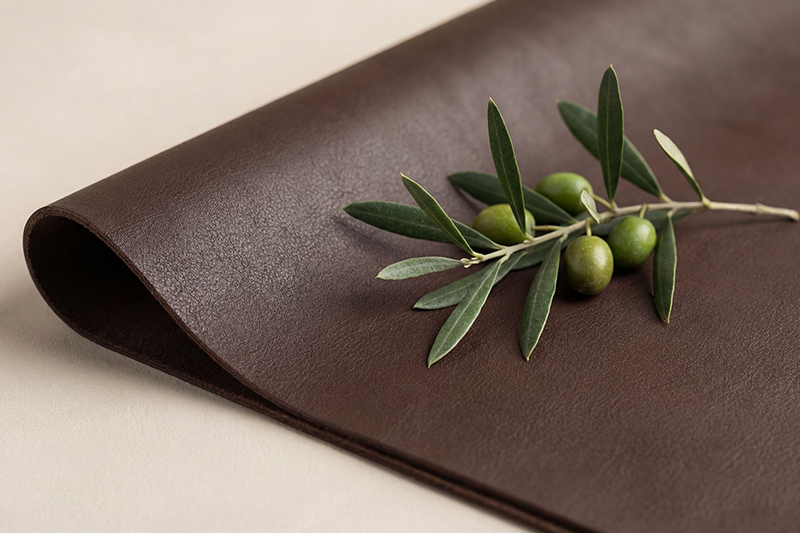
As technology continues to evolve, the sources of vegan leather materials have becomeincreasingly diverse, broadly categorized into plant-based, microbial-based, and recycledmaterial-based types. Each category demonstrates unique advantages and appeal.
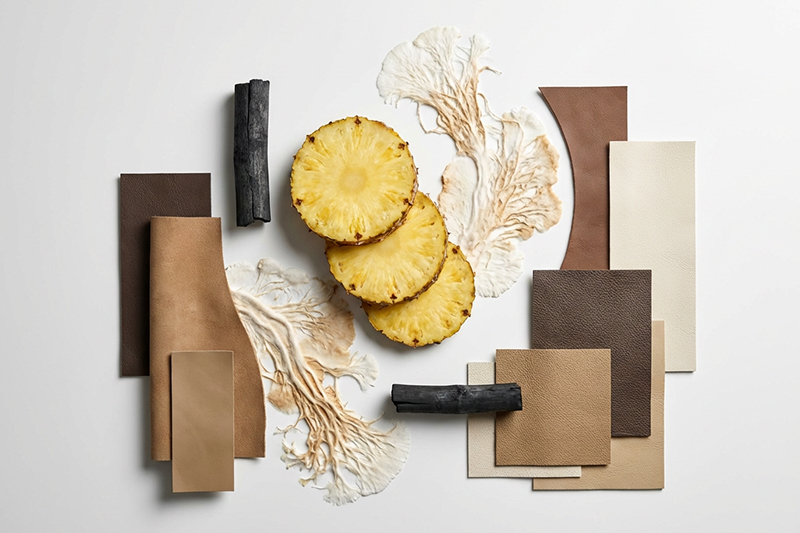
This is the most widely recognized category, utilizing natural plant fibers as core materials.Through extraction, processing, and composite techniques, these materials achieve leather-likeresilience and tactile qualities. Common raw materials include:
Pinatex: Made from pineapple leaves a byproduct of the pineapple industry-throughprocesses like degumming, drying, and weaving. This material not only repurposes agriculturalwaste but also offers breathability and durability, making it popular for fashion items like bagsand footwear.
Mycelium Leather: Cultivated in laboratories by growing fungal mycelium into a densefiber network, then processed into material. lts naturally unique texture and short productioncycle (just 2-3 weeks) make it a highly promising "future material."
Bamboo Fiber, Linen Fiber: These plant fibers inherently possess excellent breathabilityand antibacterial properties. When bonded with eco-friendly adhesives, they create lightweight,cost-effective vegan leather suitable for home furnishings like sofas, apparel, and otherapplications.
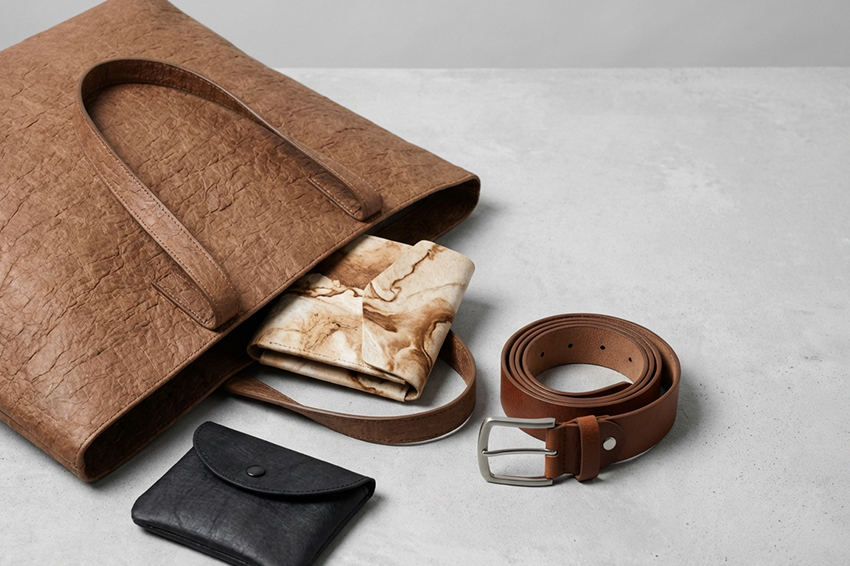 Today, vegan leather is no longer synonymous with "niche materials." Numerous global fashionbrands have launched vegan leather collections, automotive companies are adopting it forinteriors, and the home furnishings industry has embraced it as a core material for eco-friendlyfurniture. Market research indicates the global vegan leather market is projected to exceed $8billion by 2025, demonstrating robust growth momentum.<
Of course, the development of vegan leather still faces challenges-some materials carry higheicosts, and the durability of certain plant-based leathers requires improvement. However, withcontinuous technological breakthroughs and the refinement of the industrial chain, these issuesare gradually being resolved. For instance, by refining mycelium cultivation techniques, theproduction cost of mushroom leather has been reduced by 30%. Meanwhile, the application ofnew composite processes has significantly extended the lifespan of plant-based leathers.<
Ultimately, the rise of vegan leather represents a fundamental "revolution in materialperception"-compelling us to rethink the relationship between "consumption and theenvironment" and "demand and ethics." lt proves that environmental protection and practicality arenot mutually exclusive, and that sustainability can become the core driving force for industrialupgrading.As a company dedicated to the plant-based leather sector, we firmly believe that thismaterial-born from nature and committed to environmental protection-will ultimately become amainstream choice for future living, bringing greener and warmer change to the world.